About Brass Cage Bearing
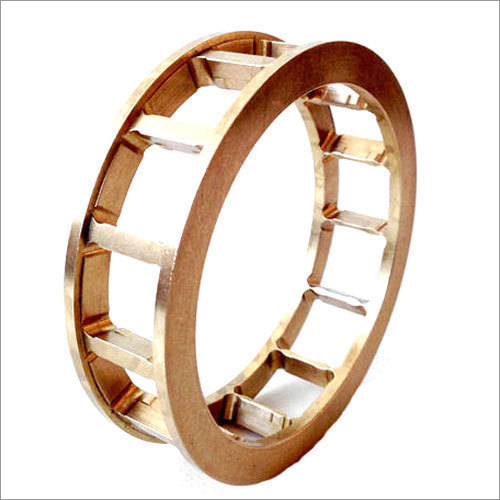
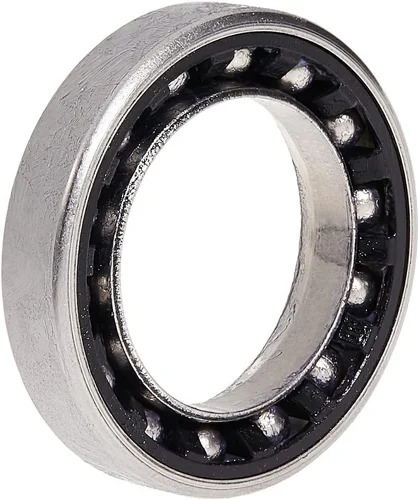
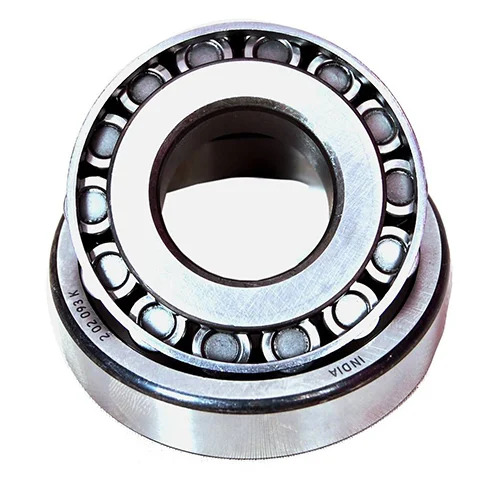
We are a trusted name among the manufacturers of Brass Cage Bearing in the market. It offers high rigidity, high strength and can be used at high temperatures. This Brass Cage Bearing also offers the key features of absorbing lubricant and performing well in aggressive environments where lubrication is marginal.
Product Details
Max. Outer Diameter | 115 mm |
Usage/Application | Industrial |
Surface Finishing | Chrome Plated |
Number Of Row | Single |
Brand | BBH |
Material | Brass |
Structure | Cylindrical |
Min. Outer Diameter | 60 mm |
Highly Durable Chrome Steel ConstructionBuilt from premium chrome steel with a polished finish, these brass cage ball bearings ensure exceptional durability and corrosion resistance. Their robust material construction is tailored to withstand heavy loads and challenging operational environments, offering prolonged service life for both high-speed and heavy-duty applications.
Precision and Compliance to International StandardsManufactured to ISO 492 specifications and rated at P6 precision, these bearings guarantee consistent dimensional accuracy. This makes them especially suitable for use in scenarios demanding balanced performance, reliability, and low noise, such as advanced automotive systems and precision electric motors.
FAQs of Brass Cage Bearing:
Q: How should Brass Cage Bearings be lubricated for optimal performance?
A: Brass Cage Bearings are compatible with both grease and oil lubrication. For continuous, high-speed operation, regular lubrication is recommended to ensure smooth rotation, minimize wear, and maintain low noise levels. Always use lubricants suitable for chrome steel and the operating temperature range of -30C to 120C.
Q: What are the primary benefits of using a brass cage in these ball bearings?
A: A machined brass cage provides excellent rigidity, reduced friction, and enhanced durability compared to alternatives. Brass resists wear and deformation under high-speed and high-load conditions, ensuring the bearing maintains performance while operating quietly and efficiently.
Q: Where can these bearings be applied most effectively?
A: These bearings are ideally used in the automotive sector, electric motors, and various types of industrial machinery, thanks to their high load capacity, limiting speed of 16,000 RPM, and resistance to wide temperature fluctuations.
Q: When should these bearings be replaced in machinery?
A: Bearings should be inspected regularly and replaced when signs of excessive noise, vibration, or increased play are detected. Replacement intervals depend on the intensity of operation, rotation speed, load, and environmental conditions within the application.
Q: What is the process of selecting the correct bearing size?
A: Selecting the correct bearing involves considering the shaft diameter (20 mm), the external diameter (47 mm), and the required load capacity (7,300 N). Its also important to match the bearing type (single row, deep groove) and precision rating (P6) with your applications specifications.
Q: How does the open seals type affect bearing maintenance and performance?
A: With an open seals design, these bearings are easier to lubricate and visually inspect, but require consistent maintenance to prevent contamination. This attribute favors applications where regular maintenance is feasible and enhanced cooling or lubrication is desired.
Q: What advantages does a polished finish provide in these bearings?
A: A polished finish helps reduce operational friction, lowers wear rates, and contributes to smoother, quieter performance. It also offers additional protection against corrosion, ensuring longevity even in demanding application environments.





 Send Inquiry

 Send Inquiry
 Send Inquiry
 Send SMS
 English
 Spanish
 French
 German
 Italian
 Chinese (Simplified)
 Japanese
 Korean
 Arabic
 Portuguese